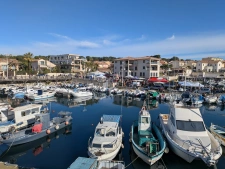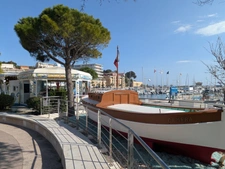
At Sausset-les-Pins, a second home does not sell in quite the same way as a standard property. Publishing a listing and waiting for calls is not enough. The file must be properly prepared, the framework clearly set, buyers reassured from the very first viewings, and the property presented in a way that matches what people are actually looking for in this market. This matters all the more because second homes and occasional-use dwellings account for a significant share of the local housing stock: 25.4% in 2022. The local property market is also split between houses (54.9%) and apartments (44.9%), which has a major impact on how a sale should be handled.
In other words, selling in Sausset-les-Pins requires more than simply putting a property on the market. You need to understand how a buyer will read the property. Some are looking for a seaside pied-à-terre. Others are already thinking about a more lasting move, a future retirement plan, or a main residence in the medium term. Very often, the ability to present the property in a clear, practical and reassuring way is what makes the difference.
Selling a second home in Sausset-les-Pins: start by clarifying the project
Before talking about photography, marketing or viewings, there is one step that many sellers underestimate and that I always address from the very first meeting: clarifying the project as a whole.
Why sell now? Within what timeframe? With what level of expectation on price? And above all: how much do you actually want to recover once costs, any taxable capital gain, and repayment of any outstanding mortgage have been deducted?
A second home comes with its own tax rules. Unlike a main residence, the capital gain made on the sale is in principle taxable unless you have owned the property for more than 22 years (income tax exemption) or more than 30 years (full exemption, including social charges). This can significantly affect your net seller proceeds, which is why it deserves to be clarified before setting an asking price. My approach on this point is simple: have the financial aspects of the file reviewed very early on by your notary, or by a suitably qualified professional who is assisting you with this part of the process. That allows you to start from a sound footing, with no grey areas, and helps prevent a well-advanced sales project from later running into a reality that was not properly anticipated.
This early clarification also opens up a very practical strategic question: do you want to sell quickly, sell under good conditions without rushing, or prepare for a more selective marketing approach? In Sausset-les-Pins, where the second-home market attracts buyers who are often knowledgeable and demanding, the strategy chosen from the outset shapes everything that follows.
Seller’s file for a second home in Sausset-les-Pins: what to prepare before viewings
When it comes to a second home, sales often become more complicated for one very simple reason: the paperwork is dealt with too late. And yet a solid file inspires confidence from the very first contact, and that is precisely where much of the smoothness of the transaction is determined.
Property surveys and reports are mandatory and regulated. Their purpose is to inform the buyer about the true condition of the property. The DPE (Energy Performance Certificate) must be included in the technical diagnostic file provided to the future buyer, and it must be displayed from the moment the property is put on the market, including in the listing itself. The nature and validity of the other required reports depend on the characteristics of the property: year of construction, presence of an older gas or electrical installation, location in a risk zone, floor area, and so on.
In practice, before putting the property on the market, it is useful to check three very specific points:
- Are your surveys and reports still valid? Their validity periods vary depending on the document: the DPE is valid for 10 years, an asbestos report has no expiry date if it is negative, while others have a much shorter validity period.
- Do they reflect the current condition of the property? A second home that is only occasionally occupied can change over time without the owner necessarily noticing it, for example because of damp, the condition of the electrical system, and so on.
- Were they carried out by a certified professional? A report prepared by someone who is not certified has no legal value. The government provides an official directory of certified property surveyors so that you can verify the provider’s accreditation.
👉 Directory of certified property surveyors: diagnostiqueurs.din.developpement-durable.gouv.fr
This may seem like pure administration. In reality, it determines the legal strength of the sale and the level of trust the buyer has in the transaction. In Sausset-les-Pins, where a significant share of second-home buyers come from outside the region and cannot make repeated trips, having a complete and reliable file from the start is often what makes the difference between a sale that moves forward and one that drags on. A reassured buyer moves forward. A buyer who discovers inaccuracies later becomes cautious and sometimes walks away.
Statement of risks in Sausset-les-Pins: what every seller needs to know
This is a document that many owners still file away under “end-of-process obligations.” That is a mistake, and in a coastal area it can be a costly one.
The statement of risks and pollution (ERP) is mandatory as soon as the property is put up for sale. It must be handed to every prospective buyer, and when a viewing takes place it must have been drawn up less than six months earlier. The notice stating that information on risks is available on the Géorisques website must also appear in the sale listing from the moment it is published: this is not fine print, it is a legal requirement. If it is not provided, or if the information is inaccurate, the seller may be held liable, including after completion of the sale.
In Sausset-les-Pins, as across the Mediterranean coastline, the ERP has real substance: low seismic risk exposure, proximity to the Massif de la Couronne, and a maritime frontage. These are known and mapped factors that are incorporated into local planning documents. They are not barriers to a sale, but they do need to be presented clearly from the outset by a professional who knows how to put them into perspective.
A well-informed buyer is a buyer who moves forward confidently. A buyer who discovers this information late, or on their own, immediately becomes more suspicious and often more demanding on price. Presenting the ERP from the very first viewing shows that the sale is properly framed, that the seller has nothing to hide, and that the support is serious. In a second-home market where buyers often come from far away and have little time for their checks, this transparency is not a detail: it is what gives credibility to the entire file.
For some properties, the energy audit must be anticipated from the start
When the second home being sold is rated E, F or G, an energy audit becomes mandatory in the event of a sale. France’s Ministry of the Economy states that it must be prepared before the property is marketed and handed to the prospective buyer at the first viewing, or at the latest when the preliminary sale agreement is signed. It complements the DPE and remains valid for five years.
This point needs to be addressed early, because it can influence how the property is perceived. A buyer interested in a house in Sausset-les-Pins is not only looking at its charm or its location. They also want to understand what it means in practical terms: the level of comfort, any work that may be needed, and how easily it can be occupied over time. It is therefore better to frame this issue clearly rather than let it surface in the middle of negotiations.
👉 To find out more about the energy audit, visit https://www.economie.gouv.fr/particuliers/investir-dans-limmobilier/tout-savoir-sur-laudit-energetique
Selling an apartment in Sausset-les-Pins: the co-ownership file must be ready before the first offer
In Sausset-les-Pins, apartments make up a significant share of the housing stock, and in this segment the quality of the co-ownership file is often what makes the difference between a smooth sale and one that stalls. Because the sale of an apartment never rests solely on the unit itself. It also depends on how clear and readable the co-ownership is: its financial situation, its management, and its recent decisions. A serious buyer, and their notary, will look closely at these elements. It is better to anticipate them.
What the law requires to be disclosed to the buyer is precise and non-negotiable: the summary co-ownership sheet, the co-ownership regulations, the minutes of the general meetings for the past three years, and information on current charges and charges outside the projected budget for the last two accounting years. The property manager then sends a dated statement to the notary, a document that allows the buyer to know exactly what costs are attached to the unit: charges due, upcoming calls for funds, and any proceedings under way.
In practice, what slows apartment sales down is almost never the apartment itself. It is the co-ownership file arriving incomplete, too late, or in disorder. At that point, the buyer starts to doubt, not the flat itself, but the management of the building and the seriousness of the transaction. Anticipating the collection of these documents as soon as the decision to sell is made, in coordination with the property manager, helps secure everything that follows. For a buyer who receives a complete and orderly file as soon as their offer is accepted, it is also a strong signal: this sale is properly under control.
Home information booklet: what sellers in Sausset-les-Pins need to check
This is a topic that many sellers, and sometimes even the professionals around them, only discover late in the process. And yet it needs to be checked early, without waiting.
The home information booklet (Carnet d’Information du Logement, or CIL) was introduced by the 2021 Climate and Resilience Act. It centralises useful information about the property’s features and, above all, about works that have had an impact on its energy performance: insulation, ventilation, heating systems, or hot water production. It is mandatory for new homes whose building permit was filed after 1 January 2023, and for existing homes that have undergone energy renovation works since that same date. In these cases, it must be handed to the buyer when the property is sold.
In Sausset-les-Pins, where part of the second-home stock has undergone renovation, especially to improve thermal comfort or move out of an unfavourable energy rating, this document may apply without the owner fully realising it.
Checking it early does not make the sale more complicated. It prevents an omission, even an unintentional one, from undermining trust at the exact moment when the buyer is trying to project themselves calmly into the property and when the slightest documentary uncertainty can be enough to make them hesitate.
Presenting and marketing your property in Sausset-les-Pins: what really makes the difference
A good listing sparks interest. It does not make the sale.
What makes the sale is overall consistency: what the listing shows, what the documents confirm, what is explained during the viewing, and what the buyer discovers afterwards, with no surprises, no discrepancies, and no grey areas. Every break in that consistency creates doubt. And doubt, with a second home, has a cost: a buyer who hesitates does not always call back.
From a formal point of view, property listings are regulated: the DPE must be mentioned, as must the energy rating, co-ownership charges, and the Carrez floor area for units concerned. These are not minor details; their absence or inaccuracy exposes the seller and weakens the credibility of the file from the very first reading.
In substance, what makes the difference in Sausset-les-Pins is the ability to answer the real questions of a second-home buyer, which are not quite the same as those of someone buying a primary residence. They are not only looking for an attractive property. They want to understand how they will actually use it: access, parking, ease of remote maintenance, real annual charges, connectivity, air conditioning, exposure. They are picturing stays, not a daily routine, and that projection needs to be supported, not left to their imagination.
A well-constructed presentation anticipates these questions. It turns a viewing into conviction, and conviction into an offer.
In Sausset-les-Pins, buyers also look closely at real life around the property
A property in Sausset-les-Pins is not judged only by its view, its terrace, or its proximity to the sea. It is also judged through a very tangible local way of life, and the most serious buyers know it.
A few useful points of reference: Sausset-les-Pins has a railway station on the famous Côte Bleue TER line, which makes it possible to reach the town without a car from the wider metropolitan area, a concrete advantage for buyers who want to come for weekends without the hassle of parking or traffic jams. The town is also crossed by the coastal path linking Sausset-les-Pins to Carry-le-Rouet, offering several kilometres of seafront walks. Just inland, the Massif de la Couronne adds another dimension, with hiking trails that can be reached on foot from the town centre.
Prospective buyers are not only assessing a pleasant setting. They are also assessing how rich and easy the day-to-day use of their stays will be: how easy it is to come often, move around freely, and enjoy the coast and nature without having to organise every outing. Anticipating these questions when presenting the property means addressing the real expectations before they are even voiced.
Second home in Sausset-les-Pins: knowing how to describe the right use of the property
Buyer profiles in Sausset-les-Pins are varied, and their expectations are not the same. A couple looking for a Mediterranean retreat, a future retiree planning a slower pace of life, a family considering a gradual move, or a buyer who wants to keep several options open: each projects a different use onto the same property.
That is why an effective presentation should never be limited to a list of features. It answers a more precise question: who is this property right for, and for what practical use?
An apartment that is easy to close up out of season does not suit the same profile as a pleasant house that requires more upkeep. A home designed for frequent short stays should not be presented in the same way as a property suited to year-round living. These nuances are far from minor. They are often what allows a buyer to move from interest to conviction. And they can only be expressed clearly by someone who knows both the property and the local market.
In Sausset-les-Pins, where second-home demand includes buyers from Marseille, regional purchasers, and more distant buyers attracted by the western coastline of the Marseille metropolitan area, this ability to identify the right use of a property is a skill in its own right, not a marketing argument, but a real service to both buyer and seller.
Property consultant in Sausset-les-Pins: why support changes the quality of the sale
What really changes the quality of a sale is not the publication of a listing. It is what happens before, during and after: putting the file in order before the buyer starts asking questions, anticipating sensitive points before they become obstacles, giving the property the right reading instead of letting every viewer invent their own. It also means qualifying contacts, managing the gaps between what the seller hopes for, what the buyer understands, and what the file actually supports, and preventing those gaps from building up until they jeopardise a sale that had started well.
Working with an independent property consultant also means choosing a very practical form of support.
There is no overloaded portfolio and no constant rotation of contacts: you deal with one person, available and involved from start to finish, whose interests are directly aligned with yours. It is tailored support, adapted to your pace and your constraints, with a level of responsiveness that a heavier structure cannot always guarantee. That independence is also backed by the strength of a structured national network: Capifrance, one of France’s leading networks of independent property consultants, with powerful marketing tools, resources and infrastructure that make it possible to ensure serious and well-exposed marketing.
This is the spirit in which I support owners selling their second home in Sausset-les-Pins: with in-depth knowledge of the local market, a structured method, and close attention to everything that makes a sale clearer, more credible, and better secured.
What I check before putting a second home on the market in Sausset-les-Pins
Before launching the sale process, I review these points with every seller:
- The framework of the project: desired timeframe, level of price expectation, real net seller proceeds after tax and costs, validated if necessary with the notary.
- The diagnostic file: completeness, validity, and compliance with current legal requirements.
- The statement of risks and pollution: up to date, issued less than six months earlier, and ready to be handed over from the very first viewing.
- The energy audit: mandatory for homes rated F or G since 1 April 2023, and to be anticipated if the property is concerned.
- The co-ownership documents: for an apartment, the summary sheet, minutes of the general meetings for the past three years, and the charges for the past two accounting years gathered before the first offer.
- The home information booklet: to be checked if the property has undergone energy renovation works carried out after January 2023.
- The presentation of the property: the elements that help the buyer immediately understand the right use of the property, in other words its accessibility, lifestyle advantages, and ease of use as a second home in the local context of Sausset-les-Pins.
This review does not take long. But it avoids a great many complications.

👉 Amandine Cavalier-Caron, Capifrance Property Consultant in Sausset-les-Pins
📞 +33 6 67 37 52 34 ✉️ Contact me by email
FAQ: Selling a second home in Sausset-les-Pins
Can you sell a second home with old property surveys and reports?
Not without checking them first. Property reports have varying validity periods: the DPE is valid for 10 years, but other documents expire much sooner. All of them must match the current condition of the property and be included in the technical diagnostic file before the property is marketed. An expired or non-compliant report can block the transaction at a very advanced stage.
Is the statement of risks and pollution really essential?
Yes, without exception. It must be given to every prospective buyer, issued less than six months before viewings, and mentioned in the sale listing with a reference to the Géorisques website. In Sausset-les-Pins, as across the Mediterranean coastline, this document has real substance. Its absence or inaccuracy can expose the seller to liability, even after completion of the sale.
What else needs to be prepared to sell an apartment in Sausset-les-Pins?
The co-ownership file must be complete before the first offer: the summary sheet, the co-ownership regulations, the minutes of the general meetings for the past three years, and the charges for the previous two accounting years. The property manager then sends a dated statement to the notary. An incomplete file, or one delivered too late, is one of the most common causes of delay, or even collapse, in an apartment sale.
Can a buyer withdraw after signing the preliminary sale agreement?
Yes. For an existing residential property, the buyer benefits from a legal 10-day cooling-off period from the date of signature or receipt of the agreement. After that period, the commitment becomes binding, except for any conditions precedent included in the contract, especially mortgage approval.
Why does the way the property is presented matter so much in Sausset-les-Pins?
Because a second-home buyer is not only assessing a setting. They are assessing a use: how easy it is to come often, access the coastline and hiking trails, manage the property remotely, and enjoy their stays without logistical constraints. In Sausset-les-Pins, the railway station, the coastal path, the proximity of the hills, and the quality of life by the sea are all concrete selling points, provided they are highlighted at the right moment, for the right buyer.
How can I know the true value of my second home in Sausset-les-Pins?
It is often the first question that should be asked, yet one of the last to be addressed. The second-home market on the western coastline of the Marseille metropolitan area has its own dynamics. A valuation based on generic comparisons can cause you to miss an opportunity, or on the contrary distort your project from the outset. To obtain a valuation grounded in the reality of the local market, with a clear view of what your property can truly achieve today, you can value your property here with Capifrance.